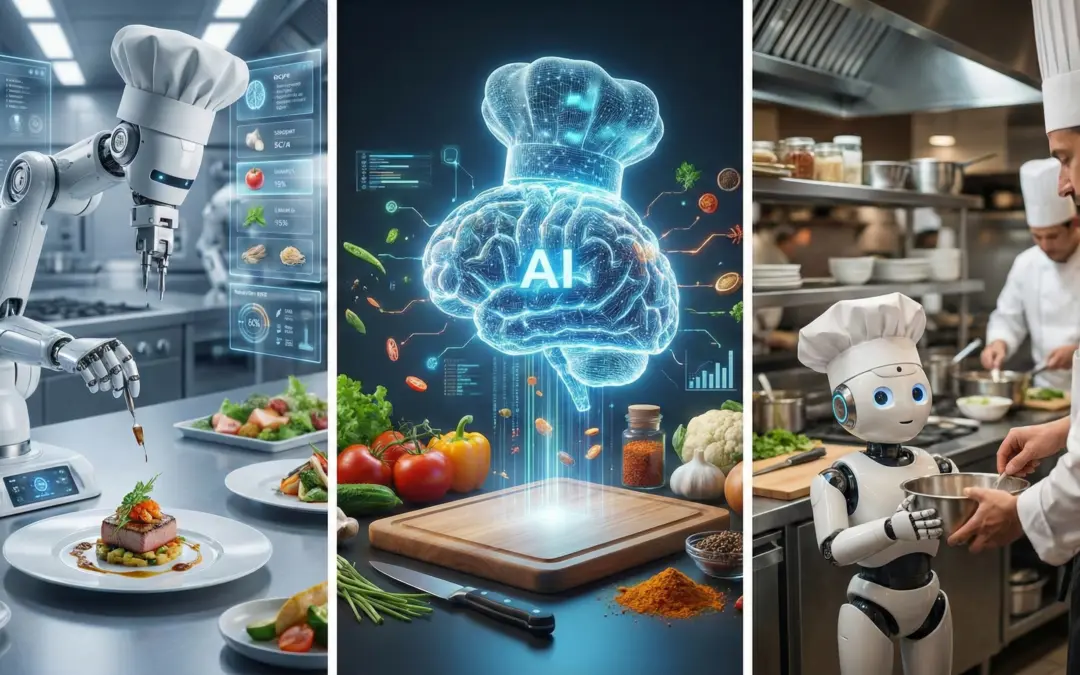
The adoption of Artificial Intelligence in Food within the Food & Beverage sector is accelerating rapidly. According to MarketsandMarkets, the global market for AI applied to the food industry is expected to reach $35.4 billion by 2028, with a CAGR exceeding 40%. Similarly, McKinsey reports that companies implementing AI solutions can achieve up to a 15% increase in operating margins through process optimization, waste reduction, and productivity gains.
Even today, restaurant chains, delivery services, food producers, and retailers are integrating Artificial Intelligence in Food to automate repetitive tasks, enhance the customer experience, and develop data-driven products. Among emerging technologies, conversational AI is becoming one of the most important accelerators for modernizing interactions between brands and consumers.
Estimated reading time: 1 minute
Table of contents
Investment Expectations of Artificial Intelligence in Food
Investment expectations of Artificial Intelligence in Food & Beverage industry are very high.
The most anticipated benefits primarily concern:
- a more personalized customer experience,
- smoother operations,
- more effective loyalty programs.
These aren’t just projections: many restaurants are already achieving concrete results, especially in inventory optimization and automating customer interactions, generating tangible economic value.
Adoption is proceeding in waves: early investments are focused on high-ROI use cases with mature technologies, while companies are now exploring emerging applications such as predictive ordering, dynamic menu optimization, and advanced sensory analysis.
Key challenges include identifying the most relevant use cases, managing risks, the lack of technical skills, regulatory complexity, and the need for robust governance. Globally, less than 30% of companies report having adequate infrastructure and capabilities, with Asia leading the way in terms of preparedness and adoption.
Benefits and applications of Artificial Intelligence in food
Operations Automation
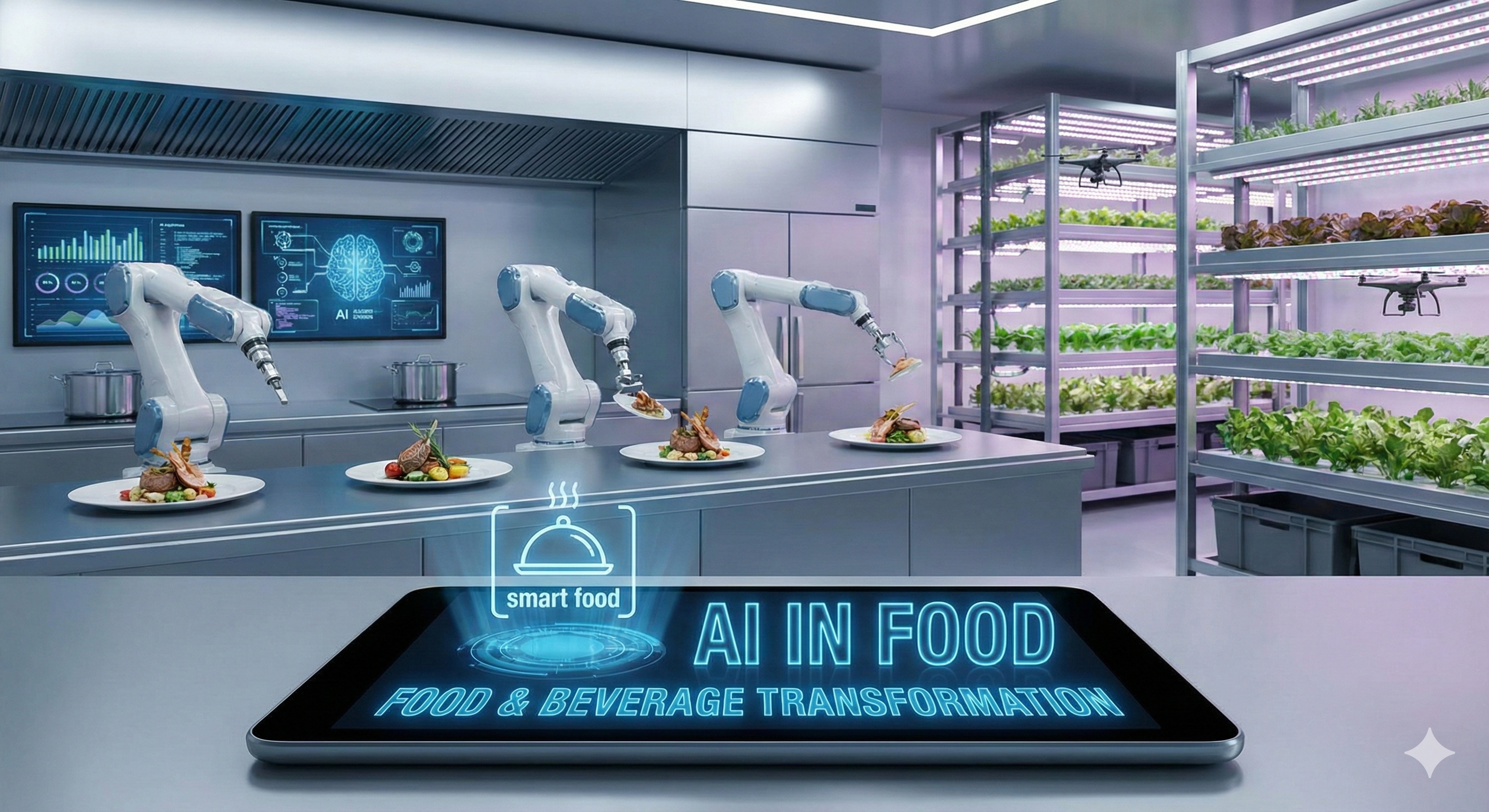
The growing shortage of qualified personnel and rising operating costs are pushing restaurants and manufacturers to integrate AI into their daily processes. Artificial intelligence allows them to manage orders and reservations, monitor and update inventory in real time, optimize supplies, and forecast future demand based on seasonality, consumer trends, and local events. This allows businesses to reduce waste, improve efficiency, and free up time for value-added activities.
Personalized customer experience
Artificial Intelligence in Food enables you to offer tailored experiences: menu suggestions based on customer preferences, dynamic real-time promotions, and intelligent loyalty programs that increase engagement and strengthen the relationship with the brand.
Food safety and quality
Machine learning and computer vision are applied to production to monitor quality, identify contamination or defects, and track product shelf life, ensuring high standards throughout the supply chain and reducing waste.
Omnichannel and conversational commerce
Consumers want to interact with brands anywhere, anytime. Chatbots for reservations, conversational ordering systems via WhatsApp, and virtual assistants on websites or delivery apps enable a seamless and consistent experience, speeding up transactions and keeping customers connected.
Concrete use cases of Artificial Intelligence in Food & Beverage
Using Artificial Intelligence in Food Production
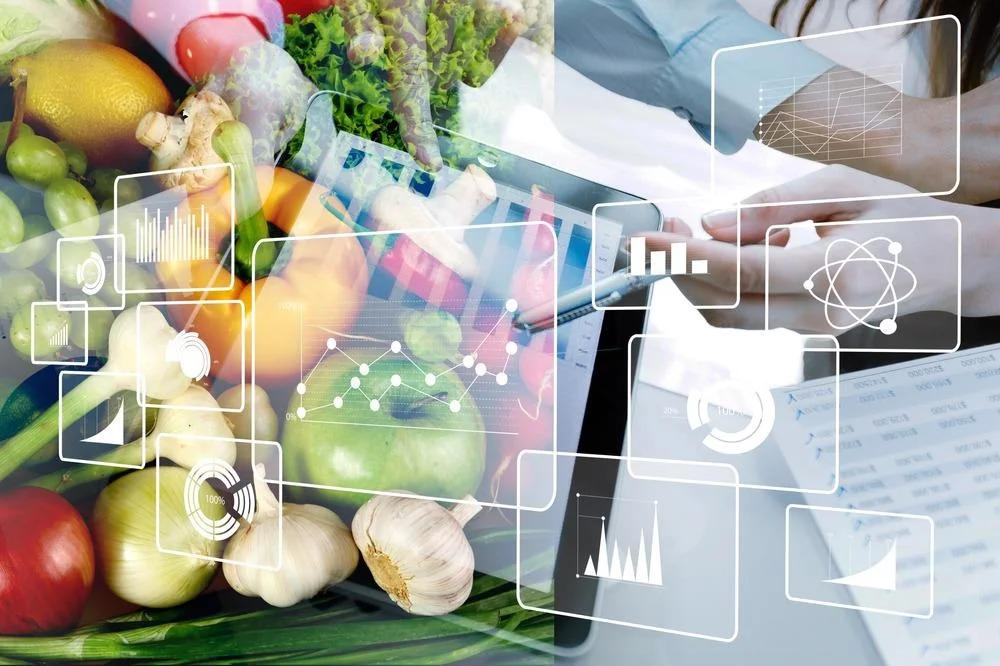
AI is profoundly transforming production processes in the food industry, bringing greater precision, efficiency, and safety. Computer vision systems, for example, can scan products and packaging, detecting defects invisible to the human eye, ensuring consistent quality standards. Similarly, predictive maintenance of machinery leverages machine learning algorithms to monitor vibrations, temperature, and usage patterns, predicting failures and reducing downtime. Product innovation also benefits from AI: through sensory analysis and consumer data, R&D teams can develop new flavors or reformulate existing recipes, for example, to reduce sugar content or optimize ingredients based on consumer preferences.
AI applied to restaurants and food service chains
In restaurants and food service chains, AI improves operational efficiency and service quality. Chatbots for reservations and orders lighten staff’s workload, ensuring accurate and timely customer requests. Thanks to demand forecasts, AI can anticipate peaks in traffic, linked to weekends, local events, or weather conditions, allowing for optimized shifts and inventory. Furthermore, dynamic menu optimization allows for real-time menu adjustments based on available inventory, dish margins, or customer preferences, improving profitability and the overall experience.
AI for e-commerce and online grocery shopping
Artificial intelligence also plays a crucial role in food retail and e-commerce. Through personalized recommendations, systems suggest products based on customer purchasing history, nutritional values, or any intolerances, increasing sales and satisfaction. Furthermore, AI supports logistics and last-mile delivery, optimizing delivery routes and managing temperatures in refrigerated vehicles, reducing waste and ensuring more efficient service.
How to implement a chatbot for the restaurant industry

Implementing an Artificial Intelligence in Food solution, for example, a chatbot for restaurants, pizzerias, dark kitchens, or chains is simple if you follow a structured process. Here are the essential steps:
- Identify use cases
The first step to implementing an effective chatbot is to clearly define the most relevant use cases for your business. Common applications include automatically managing reservations, processing online orders, providing allergen and ingredient information, and upselling activities, such as suggesting additional drinks or side dishes. Additionally, the chatbot can support customer service by quickly and consistently handling requests and complaints, freeing up valuable staff time and improving the overall customer experience.
- Choose the technology
Choosing the right technology is a crucial step in implementing an effective chatbot. It’s important to evaluate solutions that allow you to easily create and manage conversations, with the ability to customize workflows and integrate with existing business systems, such as POS, ERP, or CRM. Flexible technology allows you to adapt the chatbot to the specific needs of your restaurant or food business, ensuring automation, efficiency, and a consistent customer experience across all contact channels.
- Prepare your knowledge base
A chatbot works best when it has complete and up-to-date information. It’s therefore essential to build a structured knowledge base, including key elements such as the full menu, photos of dishes, allergen information, opening hours, current promotions, and details about delivery or takeout services. This way, the chatbot will be able to quickly answer customer questions, offering a more accurate, useful, and satisfying experience.
- Integrate the chatbot into contact channels
To maximize a chatbot’s effectiveness, it’s essential to integrate it into the main communication channels used by customers. This can include the website, messaging apps like WhatsApp or Messenger, Google Business systems, and even in-store digital solutions like kiosks or totems. The goal is to make the chatbot accessible wherever customers interact with the brand, ensuring a seamless and consistent experience across all touchpoints.
- Monitor and optimize
Once active, the chatbot must be constantly monitored and optimized to ensure ever-better performance. Thanks to integrated analytics tools, you can identify frequently asked questions, refine responses, and gradually automate an increasing number of conversations. This approach not only reduces staff workload, but also helps increase orders and improve customer satisfaction, offering a faster and more consistent experience across all channels.
Conclusions
According to Deloitte, Artificial Intelligence in Food is becoming a strategic asset for the restaurant industry: companies are already seeing tangible benefits in terms of customer experience, operations, and inventory management, but many say they are not yet ready in terms of infrastructure, skills, and governance.
For those operating in Food & Beverage, AI must be part of a structured strategy, not an isolated experiment. Identifying the right use cases, establishing adequate infrastructure, ensuring talent and governance, and launching scalable pilot initiatives are key steps to turning the promise of AI into tangible results. AI does not replace human labor: it enhances it, making organizations more agile, efficient, and customer-focused.
In short: AI is already here, it works, and it represents a concrete opportunity for sustainable and competitive innovation, whether in manufacturing, restaurants, or food retail.
Faq – Artificial Intelligence in Food
It is the application of artificial intelligence in food production, catering, and food retail to automate operations, improve quality, and offer personalized experiences.
It is used to manage reservations, orders, customer care, inventory, data analysis and demand forecasting.
It doesn’t replace, but supports: it automates low-value requests and allows staff to focus on service.
With no-code solutions like crafter.ai, implementation is quick: all you need is content, clear objectives, and a choice of channels.
Absolutely yes: it reduces time, costs and management issues, improving the customer experience even for the smallest businesses.