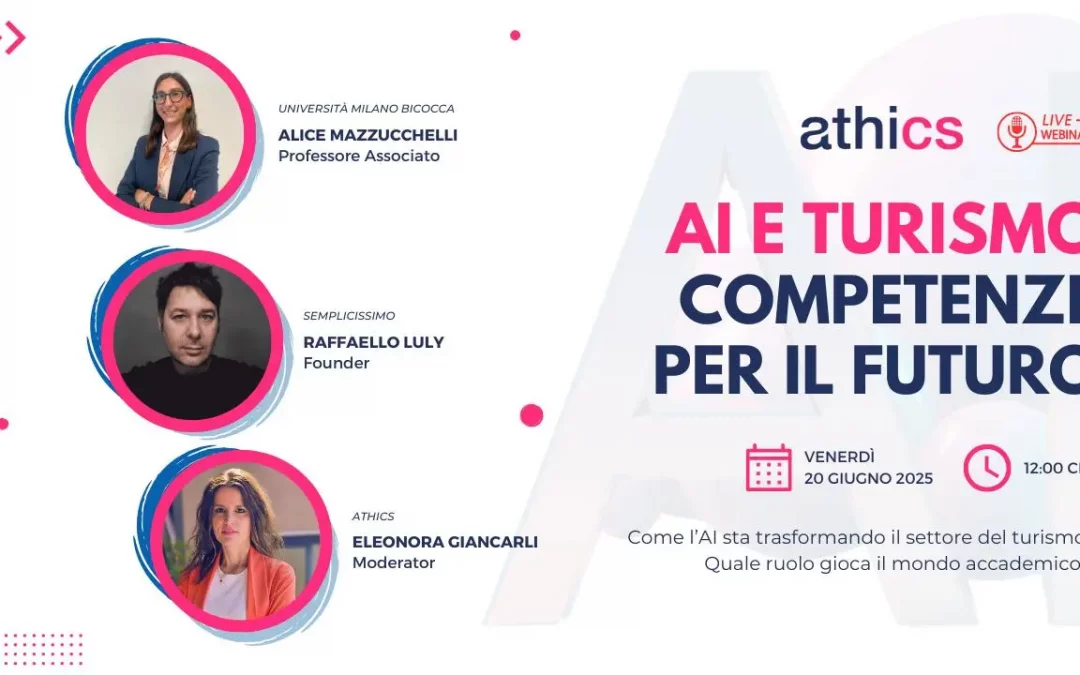
The TTG Travel fair in Rimini, Italy's leading event for the promotion of global tourism, opens its doors. Artificial intelligence and tourism are a must-see on the agenda. It's no longer a futuristic promise, but a concrete reality that is redefining the way we manage our businesses and interact with our customers.
Tourism boards, tour operators, travel agencies, airlines, accommodation providers, and, increasingly, technology and innovative solutions companies will gather from October 8th to 10th at the Rimini Expo Centre to discover how the industry is responding to the epochal change triggered by artificial intelligence. Are you ready to immerse yourself in the excitement of this event? This guide is designed to give you a preview of the potential of artificial intelligence in the travel and hospitality sector, so you can make the most of the initiative.
Table of Contents
- Artificial Intelligence and Tourism: Why is AI the star of TTG Travel 2025?
- AI and Tourism Events on the TTG Travel Experience Rimini 2025 Agenda
- Which solution to choose?
- A checklist to define the KPIs of your AI project in tourism
- Artificial Intelligence and Tourism: Let's Be Prepared
- Conclusion: AI Is Your Strategic Ally
- FAQ – Artificial Intelligence and Tourism
Artificial Intelligence and Tourism: Why is AI the star of TTG Travel 2025?
The travel industry, with its complexity and focus on customer experience, is ideal for the application of AI. When we talk about artificial intelligence and tourism, we're talking about a technology that can address the challenges of personalization, operational efficiency, and managing traveler expectations.
As highlighted in Skift's "State of Travel 2025" report, the adoption of AI technologies in tourism is estimated to be steadily growing, with investments exceeding billions of dollars globally. These data aren't just numbers; they're a clear sign that those who move first have a decisive competitive advantage.
TTG Travel 2025 has placed artificial intelligence and tourism at the center of the debate, with a series of events covering diverse perspectives. From new hotel models that "work with you (and for you)" to intelligent hotel marketing platforms, to the ethical and practical challenges of what AI cannot (yet) do, the program will offer concrete insights into how generative and predictive technologies are redefining the travel experience.
AI and Tourism Events on the TTG Travel Experience Rimini 2025 Agenda

The TTG Travel 2025 agenda offers a unique opportunity to explore these topics in depth. Panel discussions and roundtables will highlight innovative solutions for distribution, bookings, and revenue management, demonstrating how AI is becoming a strategic ally not only for operational efficiency but also for creating new experiences and relationships with travelers.
Go to the TTG Travel Experience 2025 program
AI is already at work in many tourism sectors, with concrete applications and success stories demonstrating a clear return on investment. Its implementation can be modular, allowing companies to begin with targeted projects before adopting more widely. To navigate such a broad landscape, it's helpful to consider the various AI applications based on the specifics of your business.
Artificial Intelligence and Tourism for Hotels
AI can streamline front desk management, a major cost center, through the use of virtual concierges and chatbots that answer frequently asked questions, manage service requests, and automate check-in and check-out processes.
Hotels can also optimize housekeeping staff schedules, improving efficiency and reducing costs, by analyzing occupancy data and guest preferences. AI can also be applied to building automation tools for intelligent control of lighting, access, and energy consumption, helping to create more efficient spaces.
Finally, AI tools can analyze online reviews to help hotels respond quickly and strategically, improving their reputation and overall rating.
Artificial Intelligence for Travel Agencies
An agency can adopt AI travel agents to assist customers in searching for and booking flights, hotels, and cars, as well as to independently manage changes and cancellations, sending real-time notifications about price changes or delays.
AI also allows them to analyze customer behavior to offer personalized recommendations and tailored travel options, improving conversion and loyalty.
Artificial Intelligence for Transport Companies
In the mobility sector, artificial intelligence and tourism is crucial for optimization and safety. Airlines, for example, can use AI for predictive maintenance, analyzing sensor data to identify potential problems before they occur. Facial recognition technologies speed up boarding procedures and security checks, streamlining passenger flow. AI can also contribute to vehicle safety and energy savings by monitoring tire pressure.
Artificial Intelligence for Camping
The integration of AI solutions in the camping industry focuses on maximizing direct bookings by offering 24/7 assistance. Chatbots can answer routine questions, such as site availability or pet-friendly accommodations, and autonomously manage reservations, reducing staff workload.
AI solutions can also send personalized emails to customers, recognizing repeat guests and suggesting additional activities or services to increase revenue. Some chatbots are equipped with emergency detection systems, capable of alerting staff of wildlife sightings or other urgent needs.
Which solution to choose?

Choosing the right artificial intelligence and tourism solution can seem complex, but the market offers platforms specifically designed to simplify this process, making AI accessible even to small and medium-sized businesses. "No-code" platforms, for example, allow you to develop chatbots and AI agents without writing a single line of code.
These platforms also allow you to integrate AI agents into existing business systems such as CRMs and e-commerce platforms, ensuring a consistent omnichannel experience. Managing the transition from bot to human operator ("Human in the Loop") is also crucial, ensuring that staff maintains control over the most complex cases, ensuring high-quality service.
Choosing a solution that complies with regulations such as the GDPR and that stores data on European servers, as offered by some platforms, further guarantees security and reliability.
A checklist to define the KPIs of your AI project in tourism
Adopting AI is a strategic choice, but its success depends on the ability to measure its true impact. Before launching your project, it's essential to define clear and measurable key performance indicators (KPIs). Here's a checklist of questions to help you identify the right KPIs for your specific business:
1. Strategic Goals
- What is the end result I want to achieve with this project? (e.g., improve customer satisfaction, increase direct bookings, reduce operating costs)
2. Measuring Success (KPI)
- What is the user satisfaction rate with the chatbot's responses, measured by direct feedback?
- What is the volume of conversations handled by AI, and what percentage of those are initiated autonomously by the user?
- How often is a conversation transferred to a human operator?
3. Impact on Revenue and Customers
- Has AI increased online booking conversion rates?
- How much did the average spend per customer increase thanks to personalized recommendations?
- How have online reviews and ratings changed?
- Is AI helping increase return customer rates?
4. Operational Efficiency and Savings
- How accurate are AI-generated demand forecasts?
- Have operating costs (e.g., labor) decreased as a result of automation?
- Have KPIs such as occupancy rate or revenue per available room (RevPAR) improved?
Artificial Intelligence and Tourism: Let's Be Prepared
While the benefits of AI are clear, its adoption is not without obstacles. Practical implementation challenges include initial costs, the need to integrate new systems with existing infrastructure (such as CRM and management systems), and staff training.
While AI reduces long-term costs by automating labor-intensive processes, the initial investment can be significant. The phased approach, suggested by several case studies, proves to be the most effective for mitigating risks and focusing investments in areas where the return is most immediate, such as customer service.
Gradual adoption allows teams to adapt and understand how AI does not replace them, but redefines their roles, freeing them up for more complex, value-added tasks. Furthermore, successful implementation requires a robust integration strategy. Chatbots, for example, must be natively connected to reservation systems and databases to ensure accurate responses and seamless transactions, without human intervention.
Finally, the responsible use of AI, in line with European regulations, is a crucial ethical and legal aspect that cannot be overlooked.
Conclusion: AI Is Your Strategic Ally
Artificial Intelligence isn't the future of the travel and hospitality industry; it's the present. On the one hand, it improves operational efficiency by reducing costs and optimizing resources. On the other, it transforms the customer experience, offering 24/7 service, personalization, and instant responses thanks to next-generation chatbots and conversational agents.
Adopting these technologies isn't just a matter of efficiency, but a strategic move to maintain a competitive advantage in a rapidly evolving market. If you're evaluating how to bring AI into your travel business, Crafter.ai offers solutions specifically designed for the travel & hospitality sector. Contact the team at [email protected] for a personalized consultation.
FAQ – Artificial Intelligence and Tourism
Will Artificial Intelligence replace human roles in tourism?
No, AI isn't designed to completely replace human roles, but rather to enhance them. A successful model in the tourism industry involves AI agents handling simple, repetitive requests (such as frequently asked questions or automated check-in), freeing up staff to handle more complex, personal, and high-value customer issues. AI helps increase efficiency and focus human resources where they're most needed.
Are AI solutions only available to large companies and chains?
No. While the initial investment may seem high, the market offers accessible solutions even for small and medium-sized businesses (SMBs). There are "no-code" platforms that simplify the process of developing and managing chatbots and AI agents without requiring specific technical skills. Furthermore, many solutions adopt a "pay-as-you-go" model, making AI scalable and adaptable to business needs of any size.
How can I measure the success of my AI project?
The success of an AI project must be measured through specific KPIs that align with your company's strategic objectives. Metrics may include improved guest satisfaction scores, increased online booking conversion rates, and reduced operating costs. It's essential to consistently monitor these metrics to evaluate the project's effectiveness and achieve a solid return on investment (ROI).
Which tourism sectors benefit most from AI?
All travel & hospitality sectors benefit from AI, but in different ways. Hotels use AI for 24/7 customer service and review management; travel agencies for offer personalization; airlines for predictive maintenance and boarding optimization; campsites for automated reservation management. The common denominator is always increased efficiency and improved customer experience.
How long does it take to implement an AI solution in the tourism sector?
Times vary based on project complexity, but with no-code platforms like Crafter.ai it's possible to have an operational chatbot within a few weeks. The recommended approach is phased: start with a specific use case (e.g., automated FAQs), measure results, and gradually expand functionalities.