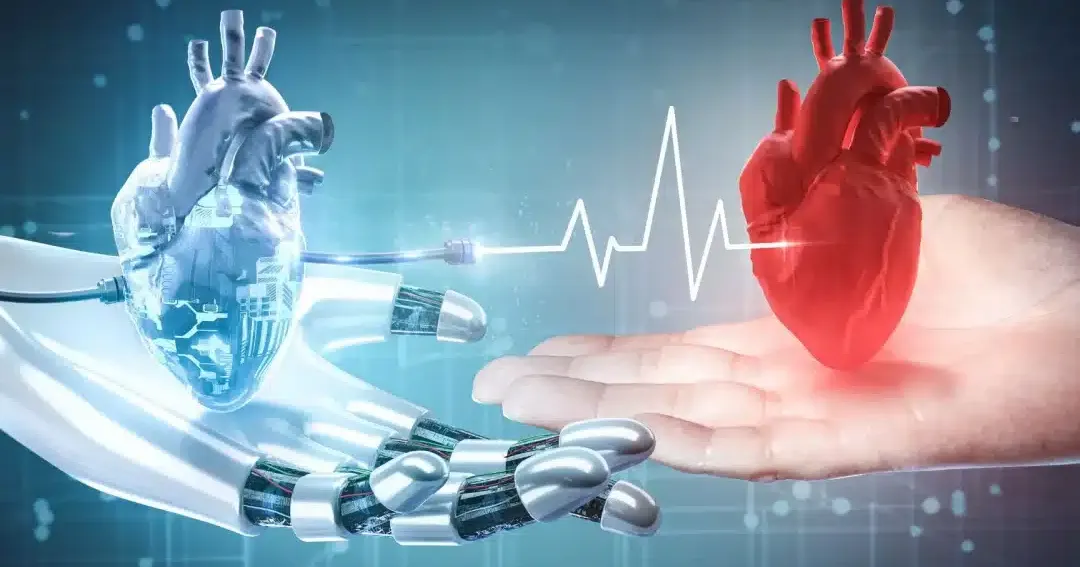
The adoption of healthcare chatbots is radically transforming the healthcare system, making it more efficient, accessible and personalized. Thanks to the integration of conversational artificial intelligence, patients, doctors and healthcare facilities benefit from faster assistance, simplified processes and constant support.
According to McKinsey, the adoption of AI in healthcare could generate savings of over $150 billion per year in the United States by 2026. Among the most promising tools are chatbots in healthcare, capable of improving both the patient experience and operational management.
Table of Contents
- Deloitte Report
- Healthcare Chatbots for Patient Experience
- Healthcare Chatbots for More Effective Diagnoses
- NLP in Healthcare
- AI for Hospital Facilities
- How to Implement Healthcare Chatbots
- Conclusions
- FAQs about healthcare chatbots
Deloitte Report {#deloitte-report}
According to the Deloitte report "The Future of Artificial Intelligence in Health Care", artificial intelligence in the healthcare sector can be divided into three large categories of application, each with specific impacts on different actors in the healthcare system.
AI for Patients {#ai-for-patients}
This category includes all applications designed to improve the patient experience, increase access to care and promote greater autonomy in managing one's health. Among the most widespread tools are conversational chatbots, which assist patients in booking appointments, provide information on symptoms or medications and offer emotional support in the post-diagnosis phases.
AI can also be integrated with wearable devices, which monitor vital parameters such as heart rate, blood sugar or sleep quality in real time, automatically alerting doctors in the event of anomalies. Furthermore, AI systems personalize reminders for taking medications, facilitate therapeutic adherence and promote healthier lifestyles.
AI for Clinicians {#ai-for-clinicians}
In this area, artificial intelligence acts as a tool to support diagnosis, treatment and clinical research. Predictive models help doctors identify complex clinical conditions early, suggesting therapeutic paths based on evidence collected from millions of clinical data.
AI is able to analyze diagnostic images (such as CT scans, MRIs, X-rays) with a level of accuracy comparable to — or in some cases superior to — that of humans, reducing reporting times and increasing precision. Furthermore, tools based on NLP (Natural Language Processing) simplify the drafting of medical records and reports, leaving clinicians more time for direct interaction with the patient. Generative AI is finally emerging as a support for research, helping professionals to synthesize studies, guidelines and scientific publications in real time.
AI for Hospitals {#ai-for-hospitals}
This category focuses on optimizing internal, logistical and administrative processes. Algorithms can predict patient flows, optimize resource allocation (beds, staff, operating rooms) and reduce waiting times in emergency rooms.
Artificial intelligence also improves healthcare supply chain management, anticipating demand for materials and drugs and minimizing waste. In addition, chatbots and virtual assistants automate front office activities such as admission, check-in, personal data updating or document management, freeing up human resources from repetitive tasks.
Healthcare Chatbots for Patient Experience {#healthcare-chatbots-for-patient-experience}

Artificial intelligence is improving the quality of the experience, reducing costs and streamlining processes. A key aspect of this transformation is intelligent self-service with healthcare chatbots, which allows patients to autonomously manage tasks such as:
- Booking appointments
- Paying invoices
- Filling and updating forms
- Booking visits and requesting medication renewals
- Completing administrative tasks
- Getting information 24/7
These operations can be performed conveniently from a smartphone, tablet or computer, at any time and in any place, following the self-service model already widespread in sectors such as retail and tourism.
Healthcare chatbots are designed to answer frequently asked questions and manage common requests, such as searching for information on medications or locating nearby medical centers. They are able to interact in a conversational way, guiding patients through procedures or resolving doubts without human intervention, in activities such as:
- Answering questions about symptoms and providing preliminary advice
- Facilitating the booking of visits and the management of appointments
- Monitoring the conditions of chronic patients, sending personalized reminders and suggestions
- Reducing the workload of healthcare professionals
The introduction of healthcare chatbots has the potential to significantly reduce the workload for administrative and medical staff, while improving efficiency and the user experience at the same time. Solutions such as Crafter.ai's Healthcare AI Agents make it possible to activate these use cases on web, WhatsApp and voice channels, in compliance with GDPR and HIPAA.
Healthcare Chatbots for More Effective Diagnoses {#healthcare-chatbots-for-more-effective-diagnoses}

AI is transforming the work of doctors and specialists, improving the ability to diagnose and treat diseases with advanced tools based on Machine Learning and Natural Language Processing.
AI in diagnostic imaging {#ai-in-diagnostic-imaging}
In addition to the use of healthcare chatbots, one of the areas where AI is having a significant impact is in medical imaging, through computer-aided detection (CAD) systems. These systems analyze huge amounts of images and clinical data to recognize abnormalities in diagnostic tests, such as:
- Mammograms: identifying areas suspicious for breast cancer
- Chest computed tomography (CT) scans: identifying signs of lung cancer
The precision of AI models in interpreting these images approaches — and in some cases surpasses — that of human specialists, opening unprecedented scenarios for early diagnosis and the reduction of false negatives.
AI in dermatology {#ai-in-dermatology}
Dermatology is benefiting from AI with CAD systems that can analyze skin lesions, learning to identify those at risk of malignancy. Although dermatologists always have the final say, these systems can help primary care physicians perform more accurate screening, significantly increasing the number of cases identified in the early stages.
Voice analysis for diagnosis {#voice-analysis-for-diagnosis}
An emerging area is voice analysis to detect vocal patterns associated with emotional states or health conditions. If confirmed by further research, this technology could become a non-invasive method for detecting certain pathologies, from Parkinson's disease to clinical depression.
NLP in Healthcare {#nlp-in-healthcare}
Despite the growing use of electronic medical records (EMR), much clinical information is still documented in an unstructured format. NLP allows free text in medical records to be transformed into coded and analyzable data, improving the management of health information.
Data can also be consulted by medical staff via healthcare chatbots. Examples of NLP applications in the clinical field:
- Transformation of medical notes: conversion of case histories and reports into structured data
- Improvement of diagnostic imaging: structuring of text interpretations of radiological examinations
- Integration of information between hospitals: standardization of data between different healthcare facilities
- Speech-to-text for clinical documentation: reduction of administrative burden on doctors
These tools allow healthcare professionals to retrieve information quickly and accurately, improving the quality of clinical decisions and reducing the risk of errors linked to incomplete or misinterpreted data.
AI for Hospital Facilities {#ai-for-hospital-facilities}
Healthcare chatbots are playing a crucial role in optimizing operational flows within healthcare facilities. Thanks to conversational AI, these tools allow to simplify and automate many daily operations, with significant impacts for both patients and hospital staff. Some of the main uses include:
Automatic patient routing: chatbots can guide patients through the registration process or direct them directly to the appointment, reducing waiting times and improving the efficiency of patient flow within the hospital.
Reduction of administrative staff workload: healthcare chatbots are able to collect preliminary information from patients, such as registering personal data, verifying insurance information and updating medical history details. This frees administrative staff from these repetitive tasks and allows them to focus on more complex and strategic tasks.
Access management and self check-in: chatbots can integrate with self check-in systems to allow patients to automatically register at the hospital entrance. This system reduces the need for physical interactions at the counter, preventing crowds and improving the patient experience.
In hospital management, artificial intelligence also finds application in more complex areas, thanks to the use of predictive algorithms and machine learning:
- Bed and resource management: predictive algorithms analyze patient flows and predict bed availability in real time, allowing hospitals to optimally manage resources.
- Forecasting peak demand and staffing planning: algorithms analyze historical data to optimize staffing planning during unexpected events or seasonal peaks.
- Optimizing supplies: AI monitors inventory levels, predicts future needs and accurately recommends replenishment orders, reducing waste.
With these tools, hospitals can reduce operating costs, improve the quality of patient care, and optimize resources more sustainably.
How to Implement Healthcare Chatbots {#how-to-implement-healthcare-chatbots}
Implementing a chatbot in the healthcare sector requires a strategic and multidisciplinary approach, which takes into account both clinical objectives and regulatory needs. Here are the key steps:
- Define clinical and operational objectives — Identify precisely what the chatbot will have to do: support patients in accessing services? Automate appointment bookings? Provide information on medications? Each functionality must respond to a concrete and measurable need.
- Involve healthcare and IT stakeholders from the early stages — The success of the project depends on the collaboration between doctors, nurses, administrators, compliance experts and the technology team. Their contribution is essential to design a useful, usable and compliant chatbot.
- Choose the most suitable technology platform and AI infrastructure — Opt for technologies that support Natural Language Processing (NLP), integration with Electronic Health Record (EHR) and interoperability with other hospital systems. The platform must guarantee scalability, reliability and data security.
- Test and optimize with real data in controlled environments — Before launch, pilot test your chatbot in a secure environment, gather feedback from end users (patients and healthcare professionals), and continuously optimize the bot's behavior based on real-world interactions.
- Ensure regulatory compliance and data security — Ensure that your chatbot is compliant with local and international regulations such as GDPR or HIPAA. Protect healthcare data through advanced security protocols, authentication systems and continuous monitoring of performance and risks.
Conclusions {#conclusions}
Artificial intelligence represents a transformative lever for the entire healthcare ecosystem, offering advanced tools for prevention, diagnosis, treatment and management of facilities. However, to fully realize this potential, it is essential to rigorously address ethical issues, algorithm transparency, bias reduction and protection of sensitive data, in full compliance with current regulations such as the GDPR.
The future of digital healthcare will increasingly pass through the integration of generative AI, wearable technology and intelligent chatbots, with the aim of making healthcare more personalized, efficient and accessible. The challenge is not only technological, but also cultural and regulatory: only responsible and person-centered use can guarantee truly sustainable innovation.
If you are considering introducing AI solutions for healthcare, Crafter.ai offers configurable platforms for chatbots and AI agents suitable for the healthcare ecosystem, GDPR compliant and integrable with the main hospital information systems.
FAQs about healthcare chatbots {#faqs-about-healthcare-chatbots}
What are healthcare chatbots? A virtual assistant that uses conversational AI to provide healthcare support, manage appointments, monitoring and clinical information — available 24/7 for patients and medical staff.
Are patient data safe with healthcare chatbots? Yes, provided the implementation complies with GDPR and HIPAA regulations, including data encryption, algorithmic transparency and regular independent audits.
What are the benefits of chatbots for healthcare facilities? 24/7 availability, leaner patient flows, reduced administrative costs, greater patient and staff satisfaction, operational scalability, and support for resource management.
Can chatbots replace doctors? No. Healthcare chatbots are support tools that automate repetitive and administrative tasks, freeing medical staff to focus on high-value clinical activities. Diagnosis and treatment remain the responsibility of the healthcare professional.
What technologies does a healthcare chatbot use? The main technologies include Natural Language Processing (NLP), Machine Learning, integration with Electronic Health Records (EHR), speech-to-text and predictive algorithms for hospital flow management.
How long does it take to implement a chatbot in a healthcare facility? Timelines vary based on project complexity, but an initial pilot implementation can be operational within 4-8 weeks, with subsequent optimizations based on real user feedback.