by Crafter.ai · July 8, 2026 · 9 min read
AI in logistics is the set of technologies — machine learning, predictive analytics, computer vision, natural language processing — that lets companies forecast demand, optimize routes and inventory, automate the warehouse and answer customers in real time. It is no longer a conference promise: it is the lever logistics companies are using to cope with volatile demand, rising costs and a chronic shortage of workers.
In 2026 the question is no longer whether to adopt AI, but where and how. The mature applications are well identified, the benefits have been measured across years of real deployments, and the entry barriers have dropped even for mid-sized companies. At the same time, installing an algorithm is not enough: you need quality data, solid integrations with your ERP, WMS and TMS, and clear goals.
In this guide we look at what artificial intelligence applied to logistics actually is, which applications deliver verifiable results, what the numbers say, which challenges to plan for and where to start. At the end you will find an FAQ section with quick answers to the most common questions.
Table of Contents
- What is AI in logistics
- AI in logistics at a glance
- The main applications
- The benefits: what the data says
- AI agents and conversational logistics
- The challenges to consider
- How to get started: 5 concrete steps
- Conclusions
- FAQ
What is AI in logistics
AI in logistics means applying algorithms that learn from data to every process in the supply chain: procurement, storage, handling, transportation, delivery and customer service. Unlike traditional automation, which executes fixed rules written by a programmer, an AI system builds its own models from order history, warehouse flows, traffic, weather, seasonality and customer behavior — and keeps updating them as new data arrives.
Several complementary technologies are involved. Machine learning powers demand forecasting and predictive maintenance; computer vision guides picking robots and quality checks; OCR and document automation digest delivery notes, waybills and customs paperwork; natural language processing and generative AI make it possible to talk to systems in plain language, as we explain in our quick guide to AI agents. The most recent evolution is agentic AI: systems that don't just recommend, but execute actions end-to-end — reordering stock or rescheduling a delivery on their own.
AI in logistics at a glance
| Item | Detail |
|---|---|
| What it is | Machine learning and AI algorithms applied to supply chain processes |
| What it's for | Forecasting demand, optimizing routes and inventory, automating warehouse and customer service |
| Who uses it | 3PL operators, e-commerce, manufacturing, retail, carriers and freight forwarders |
| Key technologies | Machine learning, predictive analytics, computer vision, NLP, generative and agentic AI |
| Measured benefits | Lower logistics and inventory costs, fewer forecasting errors, 24/7 customer service |
| 2026-2030 trend | Gartner predicts that by 2030, 50% of supply chain solutions will include agentic AI capabilities |
The main applications
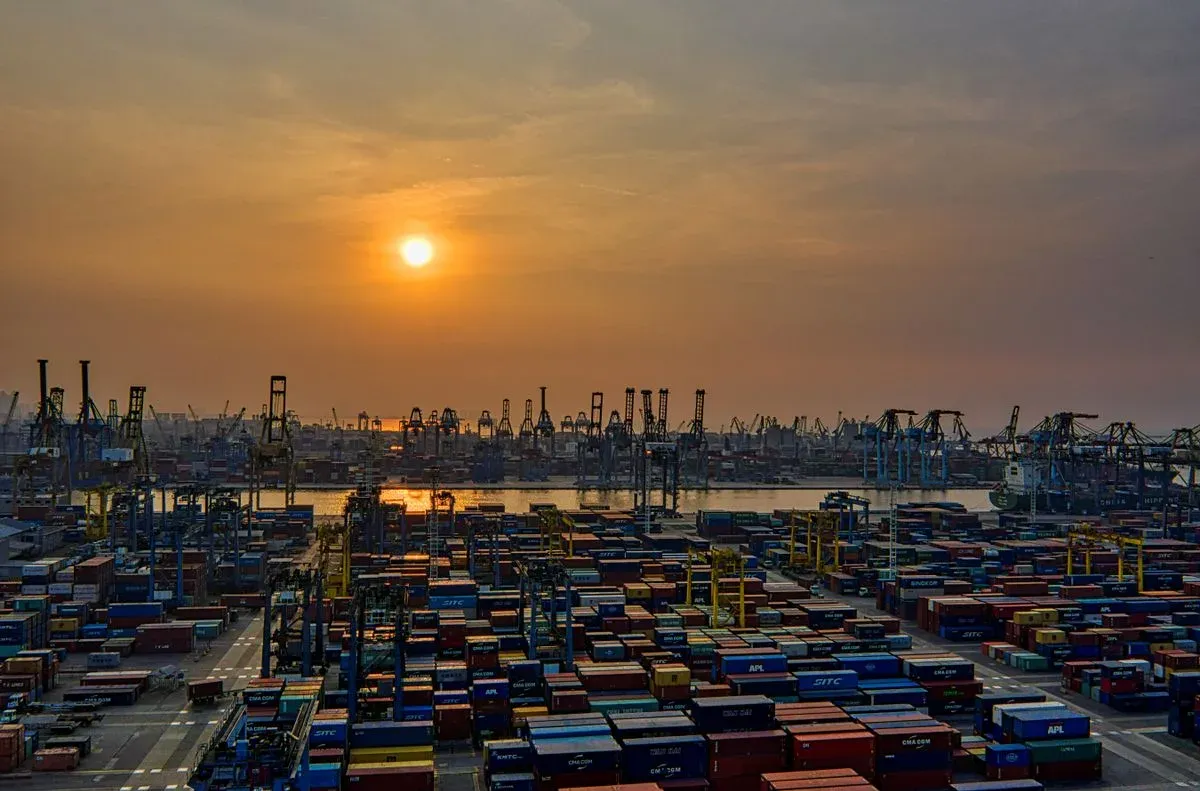
Let's look at the areas where AI in logistics produces verifiable results, from planning to delivery.
Demand forecasting
This is the application with the fastest cost/benefit payoff. Predictive AI algorithms combine sales history with external variables — weather, events, promotions, consumption trends — to estimate future demand with an accuracy traditional statistical methods cannot reach. We covered the topic in depth in our article on how to use predictive AI: better forecasts mean fewer stockouts, less capital tied up in inventory and more stable transportation plans.
Route and transportation optimization
Route optimization algorithms compute the best route for every vehicle, factoring in real-time traffic, delivery windows, load capacity and fuel consumption. It is the industry's most mature use case: UPS's ORION system, cited by Inbound Logistics among the reference examples, covers over 97% of the company's US routes and eliminates roughly 100 million driven miles per year, with estimated savings of $300-400 million.
Warehouse automation
In automated warehouses, picking robots with computer vision recognize objects they have never seen before, AGVs and shuttles move goods along AI-computed paths, and the system decides where to store each SKU based on picking frequency. The result is a warehouse that reorganizes itself as demand shifts, cutting throughput times and picking and packing errors.
Inventory management
AI makes inventory management dynamic: reorder points are no longer fixed thresholds but values continuously recalculated on forecasted demand, supplier lead times and holding costs. The most advanced systems also detect anomalies — unusual goods movements, recurring errors, out-of-scale consumption — and flag them before they hit the P&L.
Predictive maintenance
IoT sensors on trucks, forklifts and sorting equipment feed models that estimate when a component will fail, so teams can intervene before the breakdown. For a fleet or a sorting hub, the difference between scheduled and predictive maintenance is measured in recovered uptime and deliveries that happen on schedule.
Document automation
Delivery notes, waybills, packing lists, customs documents: a huge share of logistics work is still paper or PDF. OCR and generative AI extract the data from these documents and push it into management systems without human intervention, cutting transcription errors and administrative lead times.
The benefits: what the data says
The benefits of AI in logistics are not hypotheses: they have been measured across years of implementations. According to McKinsey, AI embedded in operations reduces logistics costs by up to 20%, inventory by up to 30% and procurement costs by up to 15%. A more recent analysis by the same firm on distribution supply chains estimates network cost reductions of up to 20% through AI-driven planning and optimization.
Beyond costs, the benefits span the whole value chain:
- Fewer forecasting errors: machine learning estimates significantly reduce supply chain errors compared with traditional methods.
- End-to-end visibility: real-time tracking, accurate ETAs and proactive notifications on every shipment.
- Always-on customer service: instant answers about orders and deliveries, 24/7, on every channel.
- Sustainability: optimized routes mean fewer miles, less fuel and lower emissions.
- More productive people: AI absorbs the repetitive work and frees time for decisions that require human judgment.
And the trajectory is clear: Gartner predicts that by 2030 half of all supply chain management solutions will include agentic AI capabilities, able to act autonomously on planning and sourcing.
AI agents and conversational logistics
One thread connects every application above: the data exists, but people — operators, customers, warehouse managers — need to reach it without writing queries or opening five different systems. This is where conversational AI agents come in: assistants that integrate with your ERP, WMS and TMS and answer plain-language questions such as "where is order 89234?" or "how many units of SKU X are left?".
For a customer it means knowing the status of a shipment in seconds, with no phone queue; for an internal operator it means querying the management system the way they would ask a colleague. We told this story in our article on how logistics AI chatbots are revolutionizing Industry 4.0, which explores the conversational interface between people and machines.
If you want to move from theory to practice, our platform lets you build AI agents integrated with your ERP and WMS systems without writing code: explore Crafter.ai's AI solutions for logistics, with use cases covering shipment tracking, order management and warehouse management.
The challenges to consider
It would be misleading to tell only the bright side. The first challenge is data quality: models trained on incomplete or dirty data produce unreliable forecasts, and logistics data often lives in separate silos (ERP, WMS, TMS, spreadsheets). Before the algorithm, there is almost always integration and cleaning work to do.
The second is integration with existing systems: AI unlocks value when it talks to the systems that actually run your processes, not when it lives in an isolated tool. The third is about people and skills: tools must be adopted by operators, not imposed on them; training and change management matter as much as the technology. Finally there are privacy and compliance: customer and supplier data must be handled in line with GDPR and the European AI Act, with clear governance on who decides what when the algorithm gets it wrong.
None of these challenges is a blocker, but all of them reward a gradual approach: a well-measured pilot beats a total transformation that gets announced and never finished. We wrote about this incremental approach in our guide on how to improve business processes with AI.
How to get started: 5 concrete steps
- Map your processes and pain points — Where do you lose the most time or money? Stockouts, inefficient delivery rounds, repetitive tracking tickets? Start there.
- Audit your available data — What data already lives in your ERP, WMS and TMS? Is it accessible via API? The answer determines which applications are realistic right now.
- Pick a pilot use case — A clear scope, one measurable KPI (e.g. automation rate of tracking requests, forecast accuracy), an 8-12 week horizon.
- Choose the right platform — Evaluate integration with existing systems, security, support and the ability to iterate without custom development, as we suggest in our guide to artificial intelligence solutions.
- Measure, extend, repeat — If the pilot holds up in the numbers, extend to new processes: from demand forecasting to conversational customer service, each application reinforces the others.
Conclusions
AI in logistics has moved from promises to measurable results: logistics costs down by up to 20%, leaner inventory, warehouses that reorganize themselves and customers who always know where their order is. The direction for the coming years is set — agentic AI and supply chains that correct themselves in real time — but the value is built today, one use case at a time.
The fastest way to experience that value is often the conversational front: an AI agent integrated with your ERP and WMS that automates tracking, orders and repetitive requests. If you want to see how it applies to your business, explore Crafter.ai's AI solutions for logistics or request a personalized demo.
FAQ: AI in logistics
What is AI in logistics? It is the use of algorithms that learn from data to optimize supply chain processes: demand forecasting, delivery routes, warehouse and inventory management, vehicle maintenance and customer service.
What are the most common applications? Demand forecasting, route optimization, warehouse automation with robots and AGVs, dynamic inventory management, predictive maintenance, document automation and AI agents for customer service.
How much does AI save in logistics? According to McKinsey, AI embedded in operations cuts logistics costs by up to 20%, inventory by up to 30% and procurement costs by up to 15%. Results depend on data quality and integration with your systems.
Will AI replace logistics workers? No. AI absorbs repetitive tasks — forecasts, tracking, data entry — and leaves complex decisions to people. Operator roles shift toward supervision and exception handling.
Where should a company start? With a pilot use case and one measurable KPI: demand forecasting or an AI agent for shipment tracking are the fastest entry points, because they use data the company already has.
What is agentic AI in the supply chain? It is the evolution of AI that doesn't just analyze but acts: reordering stock, rescheduling deliveries, handling requests end-to-end. Gartner predicts it will be part of 50% of supply chain solutions by 2030.