by Crafter.ai · June 10, 2026 · 9 min read
An appointment booking chatbot is an AI-powered virtual assistant that handles appointments, reservations and bookings automatically, talking to customers in natural language and writing straight into your business calendar. It's the difference between losing a request that arrives at 11 p.m. and confirming it within seconds, without anyone picking up the phone.
In this guide we'll look at what an appointment booking chatbot is, how it actually works behind the scenes, which industries benefit most, how much it costs and how to roll one out in your company. The goal is to give you a practical, complete picture — useful whether you simply want to understand the technology or you're evaluating a real project. Keep reading: at the end you'll also find an FAQ section with quick answers to the most common questions.
Table of Contents
- What is an appointment booking chatbot
- Appointment booking chatbot at a glance
- How an appointment booking chatbot works
- The benefits for your business
- Industry use cases
- Which channels to deploy it on
- How much it costs and what's the ROI
- How to implement an appointment booking chatbot
- Mistakes to avoid
- Conclusions
- FAQ
What is an appointment booking chatbot
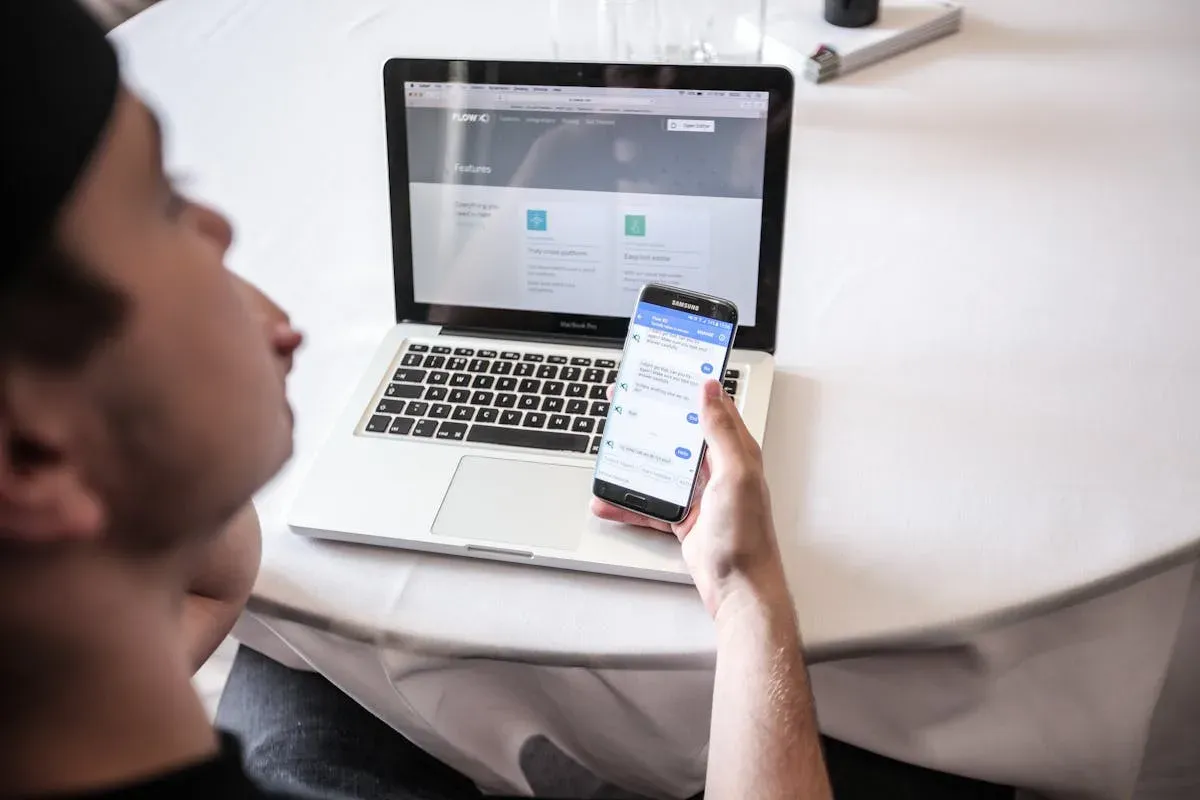
An appointment booking chatbot is a conversational software tool that automates the entire booking cycle for a service: it understands the user's request, offers real availability, collects the required details, confirms the appointment and manages any changes or cancellations. Unlike a simple contact form, it talks to the person the way a front-desk agent would — but it's available around the clock and never gets tired.
The difference from old rule-based bots is substantial. Early chatbots followed rigid decision trees: get one word wrong and they froze. Modern booking chatbots instead rely on natural language understanding (NLU) and, increasingly, on generative AI, so they grasp spontaneous sentences like "I'd like a table for four on Friday evening, outside if possible" and turn them into a concrete action in your management system. This ability to understand context is what turns a booking assistant into a genuinely useful tool rather than an obstacle for the customer.
It's also worth distinguishing it from general-purpose assistants like ChatGPT. A business appointment booking chatbot is designed to work on specific data — your calendar, your services, your availability rules — and to integrate with internal systems. It doesn't "make up" answers: it acts on real, up-to-date information.
Appointment booking chatbot at a glance
| Item | Detail |
|---|---|
| What it is | AI virtual assistant that handles appointments and bookings autonomously |
| What it's for | Automating bookings, confirmations, reminders and cancellations 24/7 |
| Who uses it | Restaurants, hotels, clinics, beauty salons, professional firms, services |
| Benefits | Always-on availability, fewer no-shows, lower costs, more conversions |
| Typical channels | Website, WhatsApp, Messenger, Instagram, Google Business |
How an appointment booking chatbot works
Picture a customer who, late in the evening, types on your website: "Got any slots tomorrow for a haircut?" Behind a seemingly instant reply there's a well-orchestrated chain of steps. Here's how an appointment booking chatbot takes the user from the first message to the final confirmation:
- Understanding the request — The NLU engine interprets the intent ("book"), extracts the relevant entities (service, date, party size) and handles any ambiguity by asking only for what's missing.
- Checking availability — The chatbot queries the calendar or management system in real time (via API) and offers only the slots that are genuinely free, avoiding annoying double bookings.
- Collecting data and confirming — It captures name, contact and preferences, applies the business rules (opening hours, capacity, service duration) and books the appointment.
- Automated reminders — It sends notifications before the appointment to cut no-shows, one of the most underestimated cost items.
- Managing changes and cancellations — It lets the customer reschedule or cancel on their own, instantly freeing the slot for others.
The technological heart of all this is integration. An isolated booking chatbot is worth little: its value comes from connecting to calendars (Google Calendar, Outlook), CRMs, industry management tools and payment systems. The most advanced architectures also use Retrieval-Augmented Generation to draw on up-to-date documents and price lists, so answers stay faithful to the company's real data. If you want to explore the technical foundations, our guide on how to create a chatbot is a good starting point.
The benefits for your business
The first benefit is the most obvious: always-on availability. A significant share of booking requests arrive outside working hours, when no one can answer. Every unhandled request is a customer who often goes elsewhere. An always-active assistant captures exactly the demand you're losing today.
Then there are more structural advantages that hit the bottom line directly:
- Fewer no-shows. Automated reminders via WhatsApp or SMS slash missed appointments, which according to several industry estimates account for 10-20% of bookings in fields like healthcare and wellness.
- Less load on staff. Repetitive booking tasks are absorbed by the chatbot, freeing your team for higher-value work and direct customer relationships.
- More conversions. An instant reply increases the odds that a request turns into a confirmed booking: response speed is one of the strongest drivers of the decision.
- Data and personalization. Every interaction enriches the customer profile — preferences, frequency, chosen services — enabling targeted offers and an increasingly tailored experience.
It's worth remembering that these benefits translate into real numbers only if the project is set up well. To measure the true return on investment, it helps to think in terms of cost per handled booking and automation rate: we cover this in our article on how to calculate the ROI of a chatbot.
Industry use cases
The beauty of an appointment booking chatbot is how cross-industry it is: wherever there's a calendar to fill, it can make a difference. The applications take different shapes depending on the context, but the logic stays the same.
In the restaurant industry it handles table reservations, special requests and waiting lists, cutting phone calls during peak hours. In hospitality and tourism, a booking assistant guides the guest from room search to confirmation, managing upselling and add-on services; we explored the sector's dynamics in our article on AI in tourism.
In healthcare, the chatbot books visits and exams, routes by specialty and sends the reminders that cut last-minute cancellations — a topic we dig into when discussing healthcare chatbots. In beauty salons, gyms and clinics, where the calendar is the real asset, automating bookings and prepayments protects revenue. Finally, professional firms and B2B services use it to schedule consultations and demos, qualifying the lead before the meeting.
Which channels to deploy it on
A common mistake is to think of the appointment booking chatbot as a widget locked inside the website. In reality, people now book where they already chat. The winning strategy is omnichannel: the same assistant, with the same "brain", active across multiple touchpoints.
- Website and landing pages, where it catches users already in the decision phase.
- WhatsApp, by now the preferred channel for messaging with businesses; we dedicated a guide to how to leverage a chatbot for WhatsApp.
- Messenger and Instagram, valuable for businesses with a strong social presence.
- Google Business Profile, which captures local "near me" searches.
The key is that the conversation stays continuous across channels: a customer who starts on Instagram should be able to complete the booking without starting over.
How much it costs and what's the ROI
The cost question is inevitable, but the answer depends on the model you choose. There are subscription-based (SaaS) solutions with a monthly fee, suited to small businesses that want to start right away, and custom projects, better for structured companies with complex integrations. On top of the fee you have to consider setup costs, integration with management systems and content maintenance.
The real indicator, though, isn't the absolute price but the total cost of ownership (TCO) relative to the value generated. A chatbot that recovers even a handful of extra evening bookings a day, or cuts no-shows by a few percentage points, quickly repays the investment. To properly frame all cost items over time, we recommend reading how much a chatbot costs and the TCO of conversational AI.
How to implement an appointment booking chatbot
A well-executed project follows an orderly path. Skipping steps is the fastest way to end up with an assistant that frustrates customers instead of helping them. These are the essential stages:
- Define your goals — Do you want to cut phone calls, reduce no-shows, increase evening bookings? Clear goals guide every later choice.
- Map the booking process — Services, durations, availability rules, exceptions: the chatbot must know them all to avoid mistakes.
- Choose the platform and integrations — Make sure it connects to your calendar, CRM and management system, and supports the channels your customers are on.
- Design the conversation — Tone of voice, handling the unexpected, handover to a human agent when needed: the experience must be smooth and natural.
- Test, launch and optimize — Measure completion rate, automation and satisfaction, then refine continuously based on real data.
A good booking assistant isn't born perfect: it improves with use, learning from conversations and from the questions it couldn't yet handle.
Mistakes to avoid
Even the best intentions can stumble. Among the most frequent mistakes is not providing a human handover: some requests are complex or sensitive and must be passed to a person, and a chatbot that fails to do so creates frustration. Another classic is neglecting reminders, giving up precisely the feature that most reduces no-shows.
Watch out for privacy too: an appointment booking chatbot processes personal data (and in healthcare, special-category data), so it must be designed in line with GDPR, with a clear privacy notice and explicit consent. Finally, avoid the launch-and-forget trap: without content maintenance and conversation analysis, even the best assistant loses effectiveness over time.
Conclusions
An appointment booking chatbot is not a tech gadget but an operational tool that moves two concrete levers: it captures demand when it arrives and protects revenue by cutting wasted calendar time. It works because it combines natural language understanding with integration into the systems that actually govern your bookings.
Whether you run a restaurant, a clinic, a hotel or a professional firm, the logic is the same: respond instantly, always, and turn every request into a confirmed appointment. If you want to understand how to build an assistant like this for your business, explore our dedicated resources and discover how Crafter.ai helps companies create tailored conversational AI agents.
FAQ: appointment booking chatbot
What is an appointment booking chatbot? It's an AI-powered virtual assistant that handles appointments and bookings autonomously: it understands the customer's request, offers free time slots, confirms and sends reminders, 24 hours a day.
Does an appointment booking chatbot work on WhatsApp? Yes. WhatsApp is one of the most-used channels: the customer books directly in chat and receives confirmations and reminders within the same conversation thread.
Does it really help reduce no-shows? Yes. Automated reminders and self-service cancellation significantly reduce missed appointments, instantly freeing the slots for other customers.
How much does an appointment booking chatbot cost? It depends on the model: there's the SaaS subscription with a monthly fee and the custom project. What matters is the TCO relative to recovered bookings and saved costs.
Does it mean replacing staff? No. The chatbot absorbs repetitive tasks and stays always on, but it hands complex requests to a human agent: it's a support tool, not a replacement.