What is the MCP Server Protocol? Imagine an extraordinary brain, capable of understanding human language, complex reasoning, and proposing intelligent solutions. This brain is the Large Language Model (LLM) — the soul of the chatbots and AI assistants we know today. But as powerful as they were, there was always a limitation: these digital brains had no arms. They could think, but not act.
This is where MCP servers come in, the technology that finally allows LLMs to "move through the world." If the language model represents the brain, the MCP server is the body that allows it to interact with the outside world: access databases, query a CRM, read a document, or send an action to a business system. In other words, MCP (Model Context Protocol) servers transform intelligence into operational capability.
Table of Contents
- What is MCP Server?
- What is the MCP Server protocol used for?
- How MCP Server Works
- How the user experience of chatbots is changing
- MCP Server Use Cases
- How to Implement MCP Server in Your Company
- Conclusions
- FAQs about MCP Server
What is MCP Server?
MCP Server, or "Model Context Protocol," is the new open source standard launched by Anthropic in November 2024 to easily and securely connect AI assistants to all enterprise data sources. Its goal? To help Large Language Models (LLMs) like Claude, ChatGPT, Copilot, or AWS Q Developer generate more relevant, up-to-date, and data-driven responses.
In practice, MCP Servers act as a bridge that allows LLMs to access data, tools, and resources in real time, while maintaining a high level of security and control.
Imagine MCP Servers as a universal interpreter between your chatbot and the rest of the digital world: databases, APIs, CRMs, knowledge management systems, and even enterprise tools like ERP or ticketing systems.
The protocol was designed to:
- Standardize connections between AI and applications;
- Efficiently manage contextual requests and dynamic responses;
- Reduce the complexity of developing and maintaining integrated AI systems.
Until now, each new integration between an LLM and an external source (such as CRM, databases, or cloud platforms) required a dedicated and often complex configuration. The MCP protocol was created precisely to overcome this fragmentation: it offers a universal communication language that allows AI assistants to access multiple systems simultaneously, in a scalable and standardized manner.
This architecture is based on three main elements:
- AI Host → the AI assistant itself (Claude, ChatGPT, Cursor, etc.);
- MCP Client → the application that uses the AI (e.g., Copilot or Notion);
- MCP Server → the component that connects the AI assistant to external data sources and applications.
Thanks to MCP Server, Large Language Models acquire new operational capabilities, transforming chatbots from simple conversational tools to intelligent agents connected to the heart of business systems.
What is the MCP Server protocol used for?
The primary goal of MCP servers is to enable a continuous and intelligent dialogue between the language model and its operating environment.
With the MCP protocol, the chatbot no longer simply generates responses based on training, but can:
- Retrieve updated information from external sources;
- Perform specific actions (such as creating a ticket, sending an email, or querying a database);
- Provide contextualized responses based on actual business data;
- Maintain the consistency and security of the information flow.
In short, MCP server transforms chatbots from simple conversational tools to operational intelligent agents, capable of acting in the real world.
This transformation is fundamental for companies that want to fully leverage the potential of conversational artificial intelligence. Without the MCP protocol, a chatbot can provide general information but cannot access real-time company data — such as order status, warehouse availability, or customer history. With MCP, however, the bot becomes a digital operator capable of acting and responding in a contextualized and precise manner.
How MCP Server Works
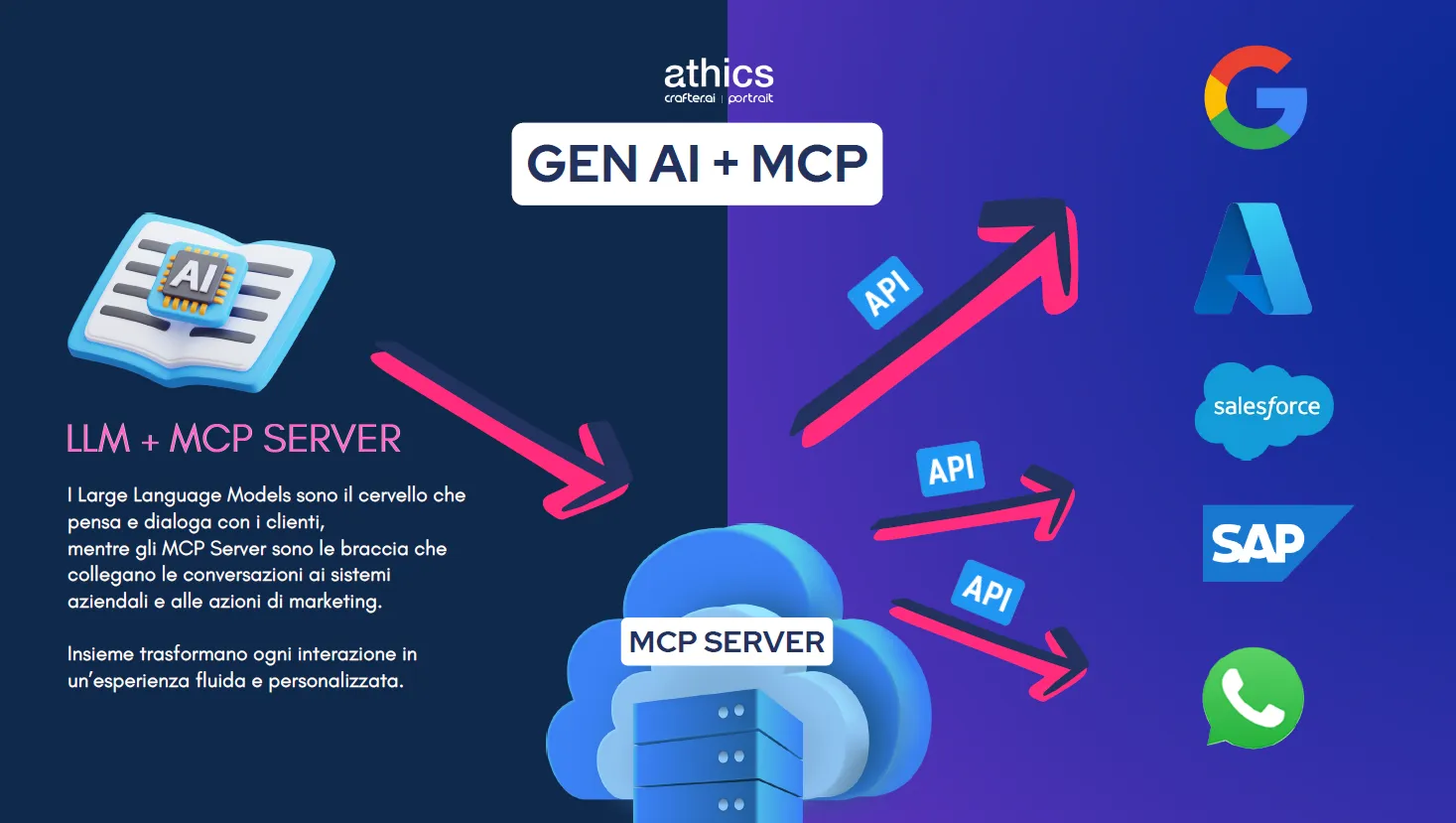
MCP server functions as a true bridge between the AI brain and the outside world. Imagine the language model as a brilliant but isolated intelligence: it can reason, understand language, and formulate responses, but it cannot directly interact with business systems. The MCP Server is what allows it to "reach out" to data and applications.
In practice, when an LLM receives a request, it no longer simply processes the response based solely on its internal training. Thanks to the MCP protocol:
- The Server receives the model request;
- Identifies the relevant data sources (CRM, ERP, databases, internal APIs);
- Retrieves or updates the necessary information;
- Returns an updated context to the model to generate accurate and relevant responses.
This standardized mechanism eliminates the need for custom integrations for each business system, ensuring scalability, security, and consistency. In other words, the MCP Server transforms a chatbot from a simple conversational tool into an operational agent, capable of intelligently responding and directly impacting business processes.
The MCP protocol architecture in detail
To better understand how it works, consider this sequence:
- A user asks the chatbot: "What is the status of my order #12345?"
- The LLM interprets the request and understands it needs to access the order system;
- The MCP Client forwards the request to the appropriate MCP Server;
- The MCP Server accesses the orders database securely and authenticated;
- The information is returned to the LLM with the correct context;
- The LLM formulates a precise response: "Your order #12345 is in transit, expected tomorrow."
All of this happens in seconds, transparently for the user.
How the user experience of chatbots is changing
The introduction of MCP Servers represents a turning point for the user experience. Today, users expect increasingly natural, accurate, and useful chatbots. Thanks to the MCP protocol, the conversation experience becomes:
- More personalized: The bot can access CRM data and previous interactions, adapting the tone and content of responses.
- Faster: By reducing the latency between request and response, MCP Server ensures seamless and uninterrupted conversations.
- More reliable: All information is verified in real time using certified sources, reducing the risk of errors or "hallucinations" by the model.
- More secure: The MCP protocol is designed to comply with stringent authentication and authorization criteria, protecting sensitive data exchanged between systems.
The result? Chatbots that don't just "speak well," but know what they're talking about — because they have access to the right data at the right time.
MCP Server Use Cases
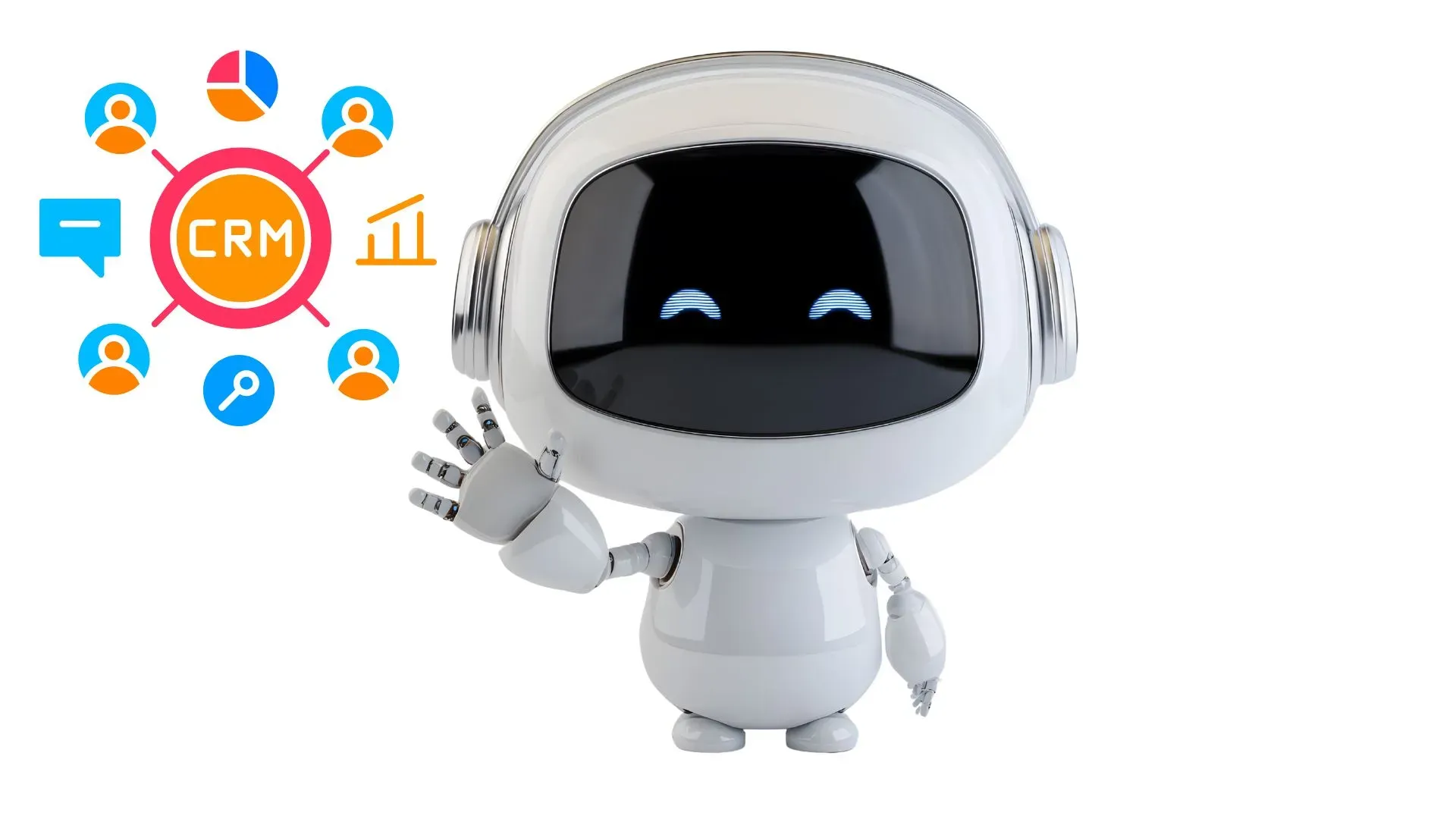
The true potential of the MCP Server emerges when seen in action within business processes. Thanks to the ability to connect Large Language Models to external data sources and applications, the possibilities are virtually limitless. Here are some concrete use cases:
1. Customer Care
A chatbot integrated with the MCP Server can access CRM and order information in real time, providing immediate and personalized responses to customers. It not only answers questions, but can also automatically update tickets, notify operators of any critical issues, and suggest proactive solutions.
Practical example: A customer asks about a delayed shipment. The chatbot accesses the logistics system via MCP, retrieves the updated package status, identifies the cause of the delay, and automatically proposes a refund or priority reshipping — all without human intervention.
2. Internal operational support
AI assistants can become true "digital assistants" for employees, consulting ERP systems, inventories, and internal knowledge bases. For example, an AI agent can guide staff in order management, inventory control, or activity planning, reducing errors and time spent searching for information.
Practical example: A warehouse operator asks the chatbot about product availability. The bot queries the ERP in real time and provides updated data, also suggesting alternative warehouses if the product is out of stock at the main location.
3. Sales and marketing data-driven
With access to up-to-date customer, campaign, and product performance data, chatbots with MCP Servers can suggest cross-selling or up-selling strategies, generate personalized reports, and even automate targeted communications, making campaigns more effective and timely.
Practical example: An AI agent analyzes a customer's purchasing behavior in real time and automatically proposes complementary products based on CRM history, increasing the average cart value.
4. Compliance and document management
In legal and regulatory settings, MCP Servers allow AI assistants to consult internal policies, regulations, or contracts in real time. This allows them to respond to complex requests, verify compliance, and reduce the risk of human error in sensitive processes.
Practical example: A legal office uses a chatbot connected via MCP to the corporate document repository. The bot can retrieve specific contractual clauses, verify GDPR compliance of a process, or generate standard document drafts in seconds.
5. Continuous innovation and integration of new tools
The MCP architecture facilitates the integration of new data sources or applications, allowing AI to expand its capabilities without having to redesign the system from scratch. This promotes scalable growth and faster, more sustainable digital transformation.
Practical example: A company that adds a new analytics tool can simply create a dedicated MCP Server, making it immediately accessible to all chatbots and AI agents already operating — without rewriting existing integrations.
How to Implement MCP Server in Your Company
The MCP server protocol allows chatbots and AI agents to access corporate systems in a secure and standardized way, but its real value only emerges when integrated into a clear vision: improving operational efficiency, enhancing customer service, or making decision-making processes more data-driven.
Step 1: Map company information sources
Every organization has an ecosystem of tools — CRM, ERP, databases, knowledge bases, ticketing systems, intranets. Implementing the MCP protocol is an opportunity to organize data flows, identify the most strategic sources, and understand what information should be accessible to AI assistants to generate real value.
Step 2: Involve the right people
Bringing the MCP Server into your company means building a bridge between business and technology. The project must therefore be approached across the board, involving IT, operations, marketing, and customer care: you don't need to be a developer, but you do need a collaborative mindset. The goal isn't just "installing a server," but enabling new digital behaviors that make the organization more intelligent and interconnected.
Step 3: Choose reliable partners and solutions
Today, platforms like Crafter.ai exist that allow you to integrate conversational agents and advanced protocols like MCP easily and securely. Relying on specialized partners helps reduce the risk of complex implementations and provides a guided adoption path, from strategy design to results measurement.
Step 4: Define success metrics
Before implementing, it's fundamental to establish clear KPIs: reduction in customer service response times, increase in first-contact resolution rate, reduction in operational costs, improvement in NPS. These indicators will allow measuring the ROI of MCP protocol adoption and continuously optimizing the system.
Step 5: Train the team and iterate
The implementation of the MCP Server is not a one-shot project, but an evolutionary process. Training the team on AI tool usage, collecting user feedback, and iterating on configurations is essential to maximize value over time.
Conclusions
MCP Servers mark a new step towards the intelligent integration of enterprise chatbots. Thanks to this protocol, language models finally become an active part of digital processes, capable of understanding context, acting, and responding consistently to user needs.
For companies, this means moving from "talking" chatbots to connected, autonomous, and reliable AI agents capable of simplifying complex tasks and improving the overall customer experience.
If you're evaluating how to implement the MCP protocol in your organization, Crafter.ai offers conversational AI solutions ready for integration with major enterprise systems. Contact the team at [email protected] for a personalized consultation.
FAQs about MCP Server
What is an MCP Server?
It is an open source protocol launched by Anthropic in 2024 that allows AI models to communicate securely with external applications, APIs, and databases. It works as a standardized bridge between artificial intelligence and corporate information systems.
Why is it important for chatbots?
Because it allows bots to access real-time data, perform concrete actions (such as creating tickets or updating orders), and offer personalized, up-to-date responses based on actual company data — instead of being limited to training information.
Is MCP Server compatible with all AI models?
Not all. But the major LLMs (like GPT, Claude, Gemini) are already introducing native compatibility or experimental integrations. The market trend is towards increasingly broad adoption of the protocol.
Is it difficult to implement?
No, if you have an advanced conversational platform that easily supports integration with external protocols. Relying on specialized partners like Crafter.ai significantly reduces implementation complexity.
What are the main advantages of the MCP protocol over traditional integrations?
The MCP protocol offers a universal communication language, eliminating the need to develop custom integrations for each system. This translates to lower development costs, greater scalability, and ease of maintenance over time.
Is the MCP protocol secure?
Yes. The protocol is designed with stringent authentication and authorization criteria. Every access to corporate systems is controlled and tracked, ensuring the protection of sensitive data and compliance with privacy regulations.