What is the difference between chatbots and AI agents? While we are still digesting the word "LLM" we find ourselves faced with yet another buzzword and a new technology to implement.
In his recent speech at CES 2025, Nvidia CEO Jensen Huang defined AI agents as the "next giant AI application," predicting they will represent a trillion-dollar opportunity. Huang described AI agents as a "digital workforce" capable of revolutionizing various industries, thanks to their autonomy that allows companies to operate without human intervention.
Table of Contents
- What are AI Agents
- The Difference Between Chatbots and AI Agents
- The Role of Chatbots and AI Agents in Companies
- Challenges and Risks: Security and Bias
- The Impact on Work and New Skills
- Conclusions
- FAQ
What are AI Agents
As Luca Sambucci explains: "An AI Agent is an autonomous system capable of receiving inputs, making decisions and acting accordingly. To do this, it must interact with other business systems or other agents.
At the heart of modern AI agents is an advanced LLM capable of reasoning. When we give it memory to handle intermediate steps, its capabilities expand dramatically: it can send emails, edit documents, access databases, and update customer information after each interaction.
An AI agent can even autonomously report an opportunity to the sales office or take strategic initiatives, going well beyond the simple question-answer interaction typical of a chatbot. AI agents don't just respond, they act. This is why we talk about "artificial intelligence that does things".
The Difference Between Chatbots and AI Agents
To explain the difference between chatbots and AI agents, let's take a step back. Before the term "AI agents" came into common use, some advanced chatbots already possessed characteristics now attributed to AI agents.
The Gea presales chatbot, developed with Conversational AI Platform Crafter.ai for Sorgenia and in production since 2020, in addition to taking charge of and independently managing customer requests, carries out operational activities such as retrieving customer data, sending it to CRM, calculating estimates and interacting with a human operator when necessary.
As explained by Luca Sambucci, the further step taken by technology is in the capacity for autonomy and reasoning made possible by the LLM and the architecture built around it — an architecture that often relies on RAG technology to ground the model's responses in verified company knowledge.
In summary, the main differences between chatbots and AI agents:
| Feature | Traditional Chatbot | AI Agent |
|---|---|---|
| Autonomy | Limited, follows predefined flows | High, makes autonomous decisions |
| Reasoning | Simple pattern matching | Multi-step reasoning with LLM |
| Actions | Text responses only | Executes actions in systems (CRM, email, database) |
| Memory | Conversation context | Persistent memory between interactions |
| Complexity | Handles simple requests | Handles complex, multi-step tasks |
The Role of Chatbots and AI Agents in Companies
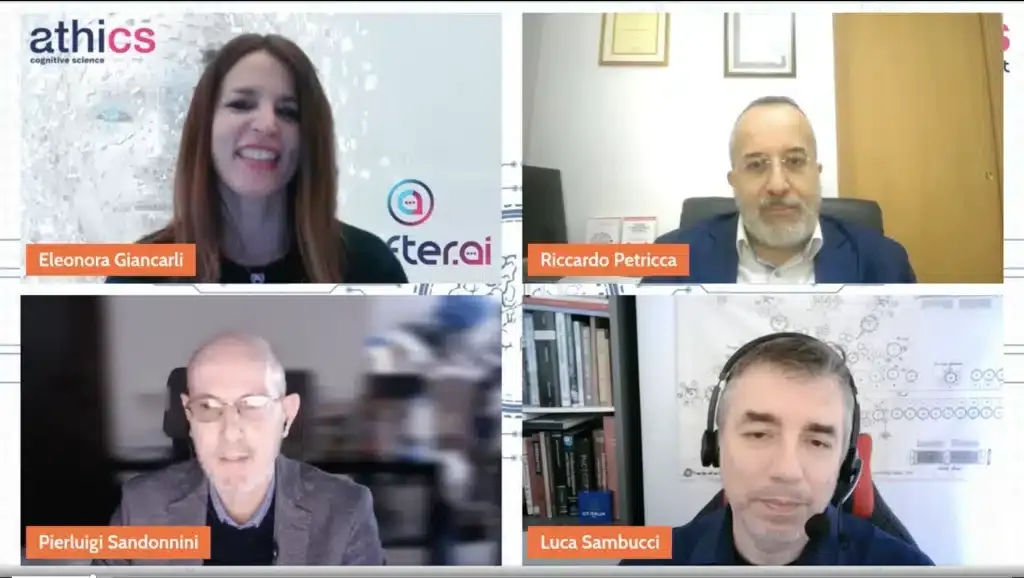
As reported by Riccardo Petricca, there is already no shortage of results in the organizational field: Microsoft recorded a 9.4% increase in sales thanks to the use of AI agents in the sales team and 25% more agreements thanks to a personalized AI buyer assistance agent.
Gartner predicts that 15% of business decisions will be made by AI agents in 2028.
Large companies are already integrating AI agents into their processes:
- Johnson & Johnson uses AI agents to speed drug discovery.
- Moody's has developed a multi-agent ecosystem to perform advanced financial analysis.
- eBay employs AI agents to generate code and create marketing campaigns.
These examples demonstrate how the difference between chatbots and AI agents translates into concrete improvements in efficiency and productivity, reducing working time and optimizing decision-making processes.
Challenges and Risks: Security and Bias
Deploying AI agents is not risk-free. The main critical issues are:
- Privacy and data security: Improper use of systems like OpenAI can expose companies to leaks of confidential information.
- Cyber attacks: Techniques such as prompt injection can manipulate AI into generating unwanted output.
- Bias in AI models: AI models are not error-free and can reflect biases present in the data with which they were trained.
According to Luca Sambucci, AI represents a new attack surface, introducing completely new threats. One of the most critical issues that have emerged with the adoption of ChatGPT is the tendency of employees to upload sensitive company documents without due precautions.
To mitigate these issues, companies must adopt AI governance strategies, invest in staff training and rely on reliable vendors that ensure a controlled environment.
The Impact on Work and New Skills
According to data shared by Pierluigi Sandonnini, 50% of the workforce will have to be retrained by 2025 (World Economic Forum). Gartner predicts that by 2027, 80% of workers will need reskilling to remain competitive.
The skills required are increasingly transversal, ranging from AI literacy to critical thinking, up to understanding the limits, biases and risks of technology.
According to Luca Sambucci, there is a growing fear that AI may reduce the number of jobs, but the reality is more complex: some roles will disappear, others will grow. Companies must promote this transformation, facilitating the acquisition of new skills and encouraging the flexibility that new technologies impose.
Conclusions
In conclusion, the evolution from traditional chatbots to AI agents represents a significant transformation in the AI landscape. These agents, equipped with decision-making autonomy and advanced interaction capabilities, are revolutionizing various industries, offering companies powerful tools to improve operational efficiency and customer satisfaction.
However, the widespread adoption of AI agents also brings significant challenges related to data security, privacy and potential biases in models. Only through a balanced and conscious approach will it be possible to fully exploit the potential of this technological revolution.
FAQ
What is the main difference between a chatbot and an AI agent?
The main difference is in autonomy and action capability. A traditional chatbot follows predefined flows and responds only with text. An AI agent, on the other hand, uses an LLM to reason in a multi-step manner, can make autonomous decisions, execute concrete actions in business systems (send emails, update CRM, open tickets), handle complex tasks and maintain persistent memory between interactions.
How can companies implement AI agents safely?
Companies must adopt an AI governance strategy that includes: clear policies on the use of AI tools, staff training on risks (prompt injection, data leakage), use of controlled environments (on-premise AI or private cloud instead of public services for sensitive data), continuous monitoring of agent outputs and collaboration with reliable suppliers that guarantee security and regulatory compliance.
Will AI agents replace workers?
Not completely. The impact is more nuanced: some repetitive and high-volume roles will be automated, but new professional figures will emerge (AI agent supervisors, conversational trainers, AI governance specialists). The World Economic Forum predicts that 50% of the workforce will need to be retrained by 2025. Companies that invest in reskilling and AI training will be better positioned to leverage the competitive advantages of AI agents.
In which sector are AI agents already showing concrete results?
The sectors with the most visible results are: sales (Microsoft recorded +9.4% in sales with AI agents), customer service (autonomous resolution of up to 80% of standard requests), pharmaceutical research (Johnson & Johnson accelerates drug discovery), financial analysis (Moody's multi-agent ecosystem) and e-commerce (eBay for content generation and marketing campaigns).
How does an AI agent integrate with existing business systems?
Integration occurs through APIs and connectors. A modern AI agent can connect to: CRM (Salesforce, HubSpot, Microsoft Dynamics), ERP, e-commerce platforms, ticketing systems (Zendesk, ServiceNow), internal databases, communication tools (email, Slack, Teams) and productivity applications (Google Workspace, Microsoft 365). The Crafter.ai platform, for example, offers pre-built connectors and open APIs to facilitate this integration.